

















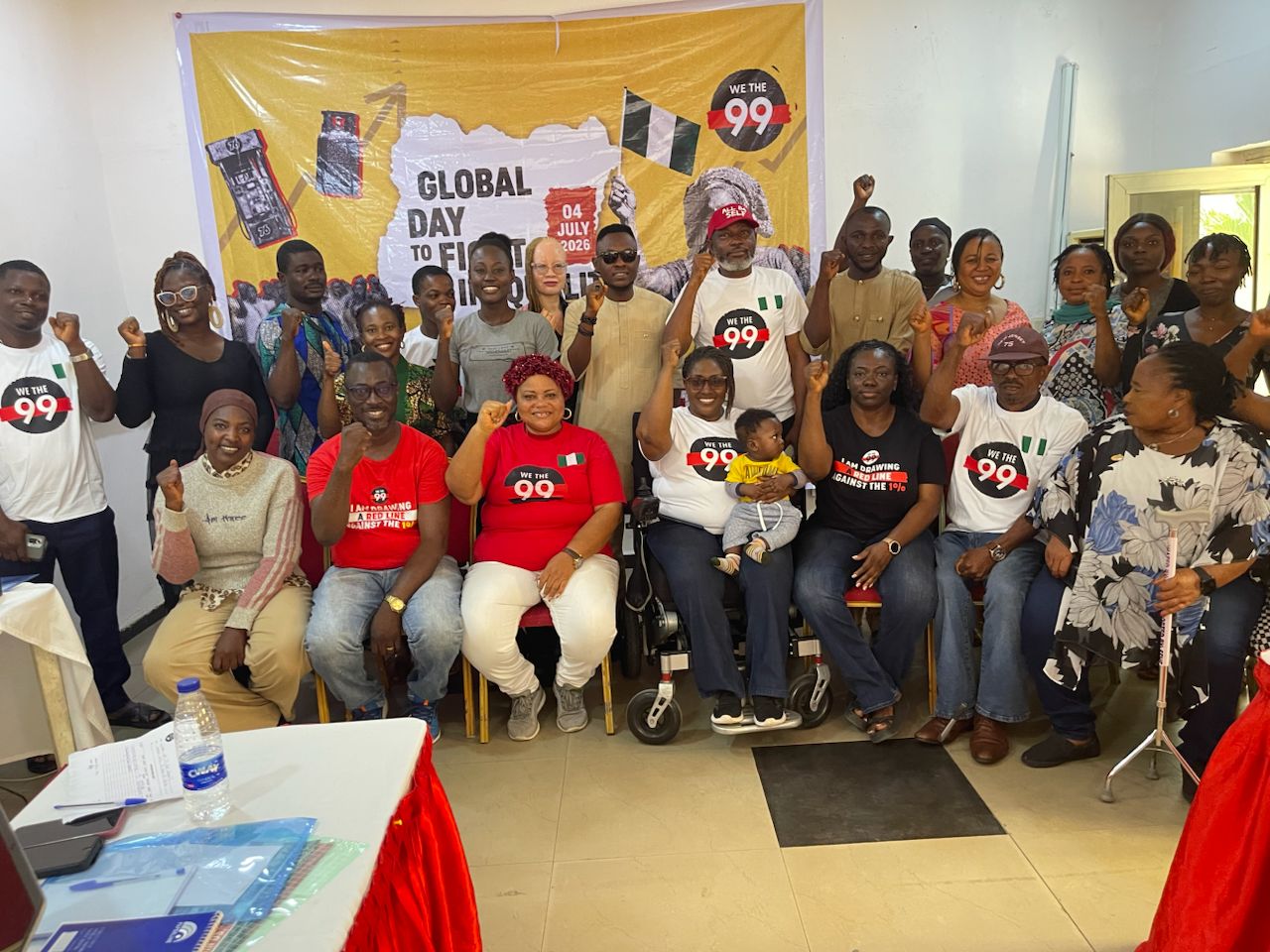
The Fight Inequality Alliance (FIA) Nigeria has called on government at all levels to adopt inclusive policies that address poverty and inequality, saying equitable access to opportunities and resources is critical to achieving sustainable development.
The alliance made the call during activities marking the Global Day to Fight Inequality in Abuja on Saturday, amid growing concerns over the country’s widening inequality gap.
According to Oxfam, Nigeria remains one of the world’s most unequal countries, with wealth and opportunities concentrated in the hands of a few while millions lack access to quality healthcare, education and decent livelihoods.
Convener of FIA Nigeria, Ekaete Umoh, said the alliance was committed to advancing policies that promote social justice and ensure no one is left behind.
She described FIA as a global movement of civil society organisations, activists and grassroots networks working towards a just, equal and sustainable world.
According to her, inequality in Nigeria is reflected in unequal access to healthcare, education, economic opportunities, gender equality, youth participation and disability inclusion.
“Our vision is to stand together to fight every form of inequality. We want a society where everyone has equal opportunities and access to resources,” Umoh said.
She noted that advocacy efforts such as the “Not Too Young to Run” campaign and the campaign that led to the signing of the Disability Act in 2019 demonstrated how inclusive policies could help reduce inequality and expand opportunities for disadvantaged groups.
Umoh urged government to create more opportunities for civil society organisations to contribute practical solutions towards reducing inequality and achieving the Sustainable Development Goals (SDGs).
“We are not just pointing out problems; we are bringing solutions and asking government to open up the space for dialogue and partnership,” she said.
Executive Director of the Centre for Transparency Advocacy (CTA), Faith Nwadishi, said addressing inequality required deliberate policies that promote equitable wealth distribution, fair taxation and stronger social protection programmes.
She cited National Bureau of Statistics (NBS) data showing that about 63 per cent of Nigerians experience multidimensional poverty, stressing that poverty extends beyond income to include poor housing, inadequate healthcare, limited access to quality education and other basic services.
Nwadishi also called for cultural and institutional reforms to eliminate discriminatory practices and expand opportunities for women, young people and other vulnerable groups.
Similarly, Chief Executive Officer of Kids & Teens Resource Centre, Martin-Mary Falana, advocated policies that discourage excessive accumulation of wealth while improving access to essential services.
He proposed progressive taxation on luxury assets and urged government to strengthen Nigeria’s healthcare system by encouraging public officials to rely more on local health facilities.
Falana said inclusive policies that prioritise the welfare of all citizens would help reduce poverty and inequality and foster a more just and equitable society.

