















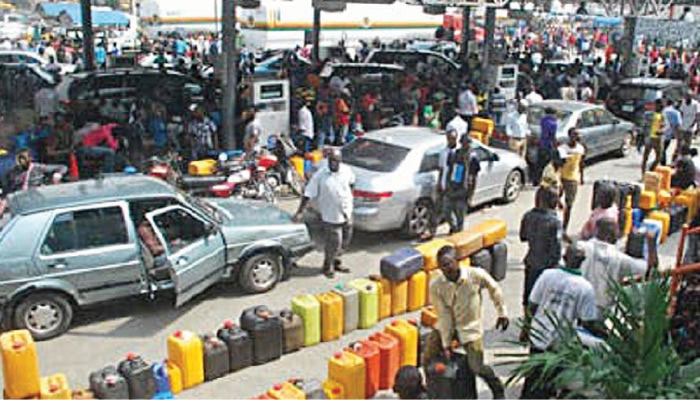
Fuel queues across Nigeria may persist until next week as oil marketers remain apprehensive and continue to keep many filling stations closed due to ongoing protests. The Independent Petroleum Marketers Association of Nigeria (IPMAN), which operates about 80% of the country’s filling stations, expressed concerns on Wednesday about the risks of reopening stations, particularly in areas where the protests have turned violent.
The nationwide protests, which began on August 1, 2024, are expected to continue until August 10, 2024. Chief Ukadike Chinedu, National Publicity Secretary of IPMAN, explained that fears of potential attacks on filling stations and fuel trucks have led marketers to shut down operations in some areas. “During the ENDSARS protest, our businesses were attacked and destroyed, and the government did not compensate us. We are being very careful now,” Chinedu said.
He noted that despite a slowdown in the protests, the risk remains high, especially in violent locations. Chinedu urged protesters to remain calm, acknowledging that their message has been heard by the government. He also mentioned that marketers are advocating for a reduction in the pump prices of petrol and diesel, as the high prices have led to a decrease in fuel consumption and reduced profit margins for marketers.
Mustapha Zarma, National Operations Controller of IPMAN, reassured that the fuel supply situation should stabilize by next week, provided the protests do not escalate further. “Nobody wants to take chances, but we have started dispatching some trucks to bring products from coastal depots to other parts of the country,” Zarma said.
In a related development, Finance Minister Wale Edun revealed that Nigeria currently spends $600 million monthly on fuel imports, with neighboring countries benefiting from these imports. He cited this as a reason behind President Bola Tinubu’s decision to remove the fuel subsidy, emphasizing that the country lacks precise data on its internal fuel consumption. According to the National Bureau of Statistics, Nigeria’s petrol imports have decreased to an average of one billion liters monthly since the subsidy removal in May 2023.

